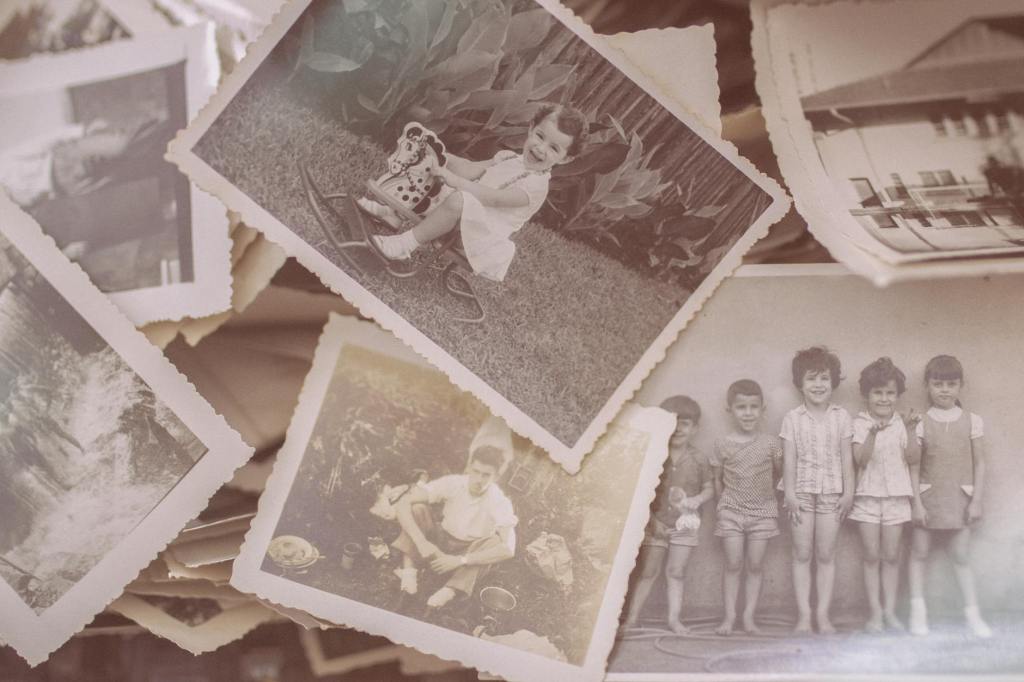
I have long been intrigued by memory. Why do we remember the things we do? Yes, it makes sense that we remember the big moments in life: graduations, holidays, weddings, funerals, “firsts” of all kinds! But why do we remember some random everyday events and not others?
At age 9 or 10, I remember sitting in our comfy brown rocker recliner in our dark living room with just the Christmas tree lights on. I’m guessing my brothers were having a bath or already in bed. It was so peaceful and beautiful. I loved how the lights reflected against our picture window and out to the snow beyond. I can almost transport myself back to this moment.
At age 14, I was sitting out on our farm house porch on a chilly, cloudy fall day poring through the newly arrived Montgomery Ward’s Christmas catalog. I can still see the gray sky and the brown fields across the road. I can still feel the cold air against my face and the excitement as I turned the pages, earmarking those of interest. Dreaming of the clothes I might get.

Why do I still recall these simple moments and not others?
And why are some experiences lost to the mists of time or never “recorded”?

In my junior year of college I went to England for a month on a class trip. After spending mornings in lectures, we we free to go out and about in London. There were also planned day excursions by bus. One was to Oxford–beloved Oxford with its “dreaming spires” about which I can remember nothing. Nothing. And for some strange reason I have no photos of it either. Why? Why? Why?
Actually I take that back I have one snip of a memory. We are walking through a small university chapel with elaborately carved wood walls. A girlfriend and I were examining the carvings and we found depictions of animals engaged in amorous congress and I remember laughing. That’s my sole Oxford memory.
And why do the hard moments of life stay with us forever?
Sadly, we all have tons of these memories too. Things we wished we could forget. At times I wish I could edit my brain like a computer and drag things to the trash can.

Like this one. Back in junior high school in the 9th grade I was walking down the hallway towards my locker. It was December and not long till a much-anticipated Christmas break. One of my girlfriends, one of my posse, sidled up to me and pressed a tightly folded note in my hand. (That was how we did them back then. Secret communications were always done in tightly folded notes.) I opened it at my locker to find a long missive from my three besties telling me they couldn’t be friends with me anymore because I wasn’t “cool enough.”
I was hurt, bewildered and angry. My friends were “breaking up with me” and didn’t even have the courage to tell me to my face. (I suppose nowadays it’s the equivalent of breaking up by text.) And what the heck made them think they were so cool? Tell me that!
Thankfully I had other friends and landed on my feet. Still it’s a memory I could live without. Betrayal and rejection are not easy at any age.
Yes, memory is a curious thing…
And I’ve learned that what sticks in the brain long term is prone to inaccuracy. The National Library of Medicine states, “Long-term memory is often considered easily corruptible, imprecise, and inaccurate, especially in comparison to working memory.” Leon Ho of LifeHacks explains, “Most times, people retain the visual aspects of an event but forget the details. What the brain does is to curate details that are reasonable to fill in this gap.”
Ahhh…I’ve often wondered how memoirists can recall all the very specific details from an event long ago—from the clothes worn to the exact words spoken. Now I am realizing that likely, from time to time, poetic license is taken.
Is it time to preserve (and heal) memories?
I am also aware that retaining memory is not a given. As folks live longer, dementia and Alzheimer’s seem more common. And as the years quickly slip by maybe now is the time to put pen to paper (or fingers to keyboard) and start preserving our memories for ourselves and future generations.
But as importantly writing them down can be therapeutic. I am a fan of the book “Writing to Heal” by James Pennebaker who leads readers through short writing exercises that help allow recovery from “trauma and emotional upheaval.” And I can attest that I have found it very helpful. Something to consider when not all your memories are good ones!
Still I am grateful to have more good memories than bad ones. Would love to hear about some of your favorite memories.








Leave a Reply