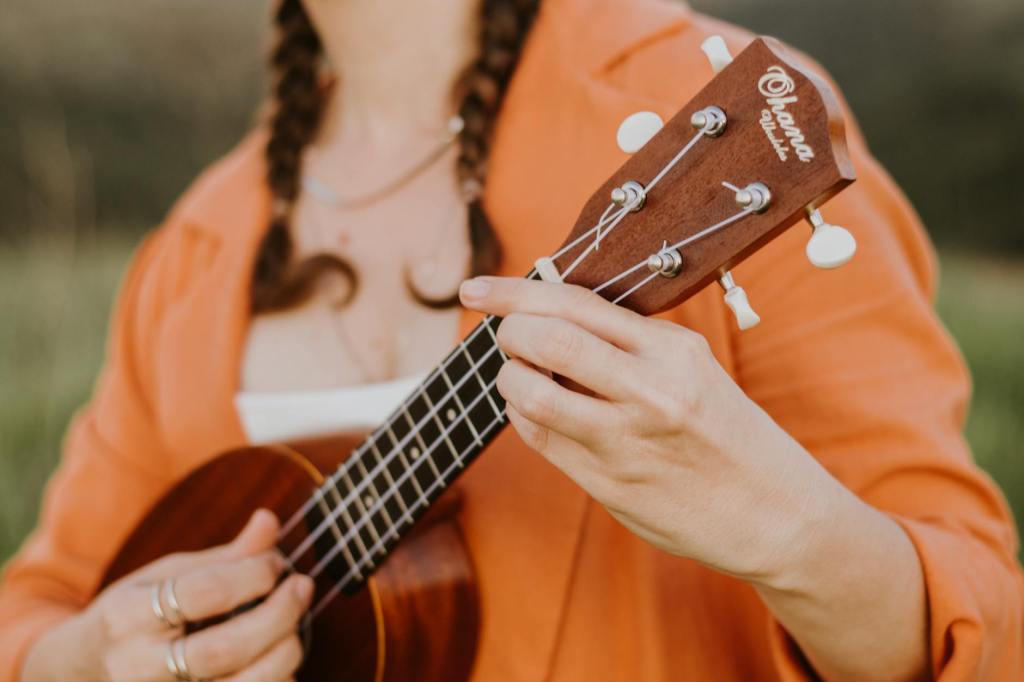
For an event with “boot camp” in the title, ukelele boot camp was extremely chill. I and other uke-curious newcomers gathered on a sleepy Saturday morning in a small classroom at the local community college. The instructor provided ukeleles for us to try and promised that by the end of the half-day we would be able to play a song on the uke. In my case, he was almost right. I could play every other chord in the two-chord song.
But even with my moderate success, I was smitten. I bought my first ukelele and set about building on my boot camp skills with YouTube videos and songs labeled Easy. I fumbled through “Stand by Me” and “Let It Be” many times, trying to play through without mistakes. I was not a natural, but I kept at it.
A lot of people worry that trying to learn an instrument as an older adult is too difficult, and even an instrument as easy as the ukelele takes practice. However, learning an instrument as an older adult is extremely beneficial. Brain imaging reveals that when musicians play, their whole brain lights up. One study showed that older adults who were given piano lessons had improved memory function compared to those who did not have the lessons. Musicians have a lower risk of dementia as well.
Music also benefits older adults socially. Soon after taking up the uke, I joined a local ukelele club. For an hour and a half each week, we meet to play and sing together. We periodically busk at the local farmers’ market for charity, and our annual holiday party is legendary.
But wait, there’s more! Musicians also experience improved coordination, reduced stress, increased confidence, sharper reaction times, improved focus, better time management skills…the list goes on.
Because playing the ukelele always lifts my spirits, I’ve turned into a ukelele evangelist. But learning any musical instrument has the same benefits—choose an instrument that attracts you. I picked the ukelele because I wanted a portable instrument that I could sing with, and it is easier than a guitar. But if you’ve always wanted to play the oboe, why not give it a try? If you have arthritis, try singing, which is great for improving breathing, or drumming, which improves visual memory.
I’ve recently started lessons on the melodica, a wind instrument with a small piano keyboard. I heard it being played and fell in love with its harmonica-like sound. Am I good? Not at all. Having never played the piano, I have a steeper learning curve than many people. But am I enriching my life? Definitely, because I’m improving my health and having a great time doing it.

Ann Hillesland, a California native, writes fiction and nonfiction, including a blog about vintage hats. Her work has been published in many literary journals, including Fourth Genre, Sou’wester, Bayou, The Laurel Review, Ghost Parachute, and SmokeLong Quarterly. It has been selected for the Wigleaf Top 50 Very Short Fictions, been nominated for Pushcart Prizes, and has been presented onstage by Stories On Stage. She is a graduate of the MFA program at Queen’s University of Charlotte.





 Today's Women of Age
Leave a comment